
When Should You Consider Restructuring?
Corporate restructuring may be appropriate when you are:
- Bringing in a new business partner or investor
- Changing your company's shareholders
- Transferring shares
- Expanding into a new business
- Setting up a holding company or subsidiary
- Separating different business activities
- Preparing for a business sale
- Planning business succession
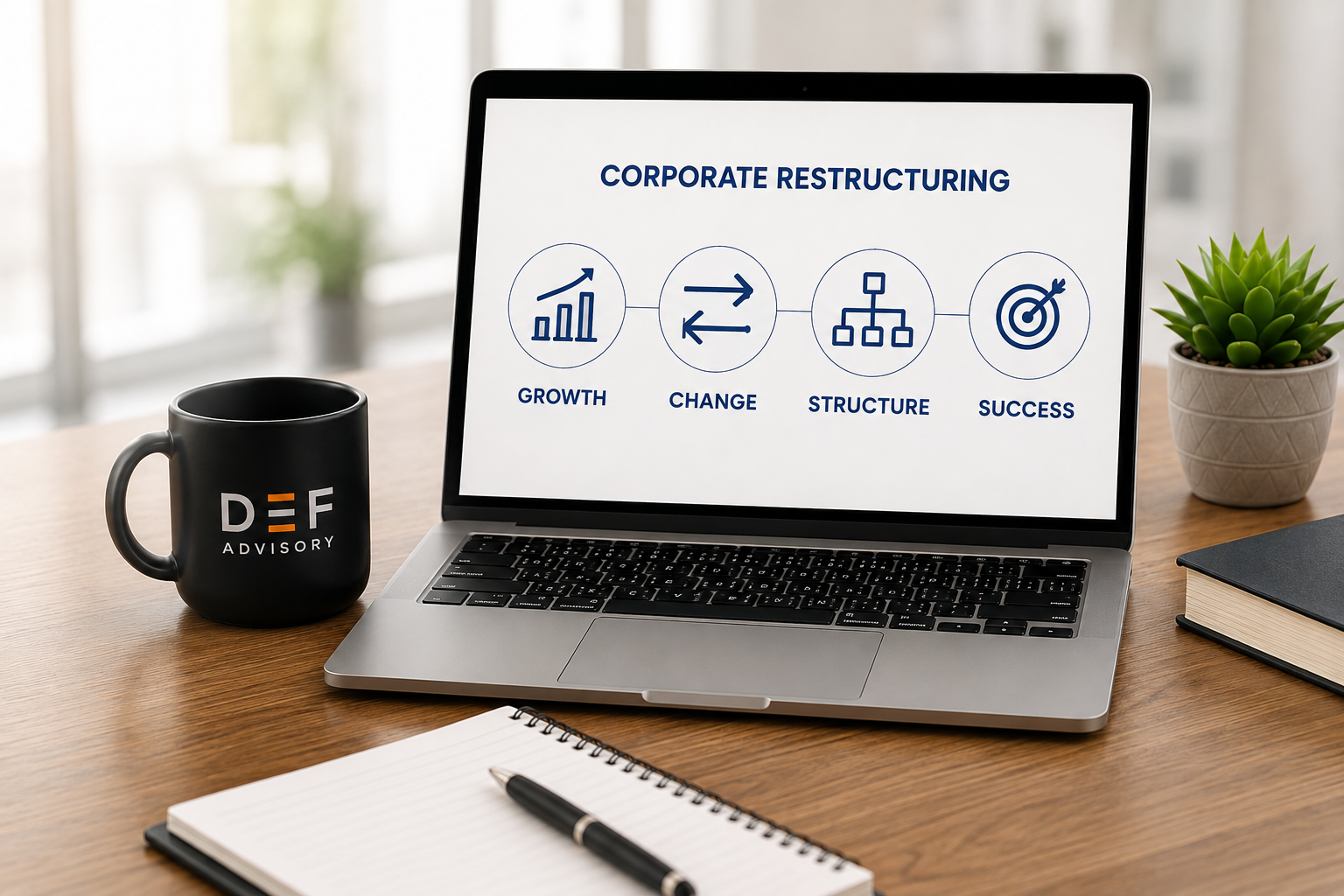
- New Investors
- Business Growth
- Better Structure
- Long-Term Success
Common Types of Restructuring
Share Transfer
Transfer existing shares from one shareholder to another.
Share Allotment
Issue new shares to existing or new shareholders, for example when bringing in an investor.
Change of Directors
Update the company's directors when there are changes in management or ownership.
Holding Company Structure
Create a holding company to own shares in one or more operating companies.
Business Reorganisation
Separate different business activities or reorganise the company's structure as the business grows.
How Does Corporate Restructuring Work?
- 01
Understand Your Goals
Identify what you want to achieve, such as bringing in an investor or changing ownership.
- 02
Review Your Current Structure
Review your shareholders, directors, business activities and existing companies.
- 03
Determine the Right Approach
Consider options such as share transfer, share allotment, a new company or a group structure.
- 04
Prepare the Documentation
Prepare the necessary resolutions, agreements and corporate documents.
- 05
Complete the Required Filings
Submit the relevant documents and update the company's statutory records.
Things to Consider
Before restructuring, you may need to consider:
- Corporate compliance
- Tax implications
- Accounting treatment
- Legal agreements
- Business licences
- Shareholder rights
- Beneficial ownership requirements
How DEF Advisory Can Help
Making Corporate Restructuring Simpler
DEF Advisory can assist with the corporate and company secretarial aspects of your restructuring.
Our support may include:
- Share transfers and allotments
- Changes in directors and shareholders
- Corporate resolutions
- Statutory record updates
- Beneficial ownership updates
- New company incorporation
- Holding/subsidiary structure coordination
- Ongoing corporate compliance
Frequently Asked Questions
Do I need to create a new company to restructure?
Not necessarily. Restructuring can sometimes be achieved through changes to shareholders, shares, directors or business arrangements.
Can I change my company's shareholders?
Yes. Depending on the circumstances, this may involve a share transfer or share allotment and the appropriate corporate procedures.
Will restructuring have tax implications?
It may. The tax implications depend on the type of transaction and your specific circumstances. Professional tax advice should be obtained before proceeding.
Can DEF Advisory help with restructuring?
Yes. DEF Advisory can assist with the corporate secretarial and compliance aspects of restructuring and coordinate with other professional advisers where required.
How long does the restructuring process take?
The timeframe depends on the type and complexity of the restructuring, the approvals required and the readiness of information and documents.